
Sizing & installation
Above-ground or buried: 120, 250, 320, 500, 1,000 and 2,000 gallon tanks. Pad, anchoring, setbacks, and the gas line to the generator.
Most Florida homes do not have piped natural gas, so standby power means a propane tank — sized right, set to code, and full before the storm. We handle the tank, the permit and the tie-in, size the tank for the days of runtime you choose, and schedule your refills with our propane supplier.
Tanks fill to 80%. Ranges assume half to full load on an air-cooled 22 kW unit. We size yours on the assessment — a bigger house, a pool pump, or a second air handler changes the answer.
After a hurricane the gas stations are dark, the roads are blocked, and every propane truck in the county is spoken for. The fuel you have on site the day before the storm is the fuel you have. That is why the tank is not an afterthought to the install — it is the install.
That is most Florida homes. Standby power runs on propane instead.
of fuel on site is the floor we design to. Longer for medical needs or assisted living.
Season opens. Our storm-fill customers are topped off before it does, and again when a storm is named.
Generac, Kohler, Cummins, Caterpillar, or whatever someone else installed. We tie in and fuel it.
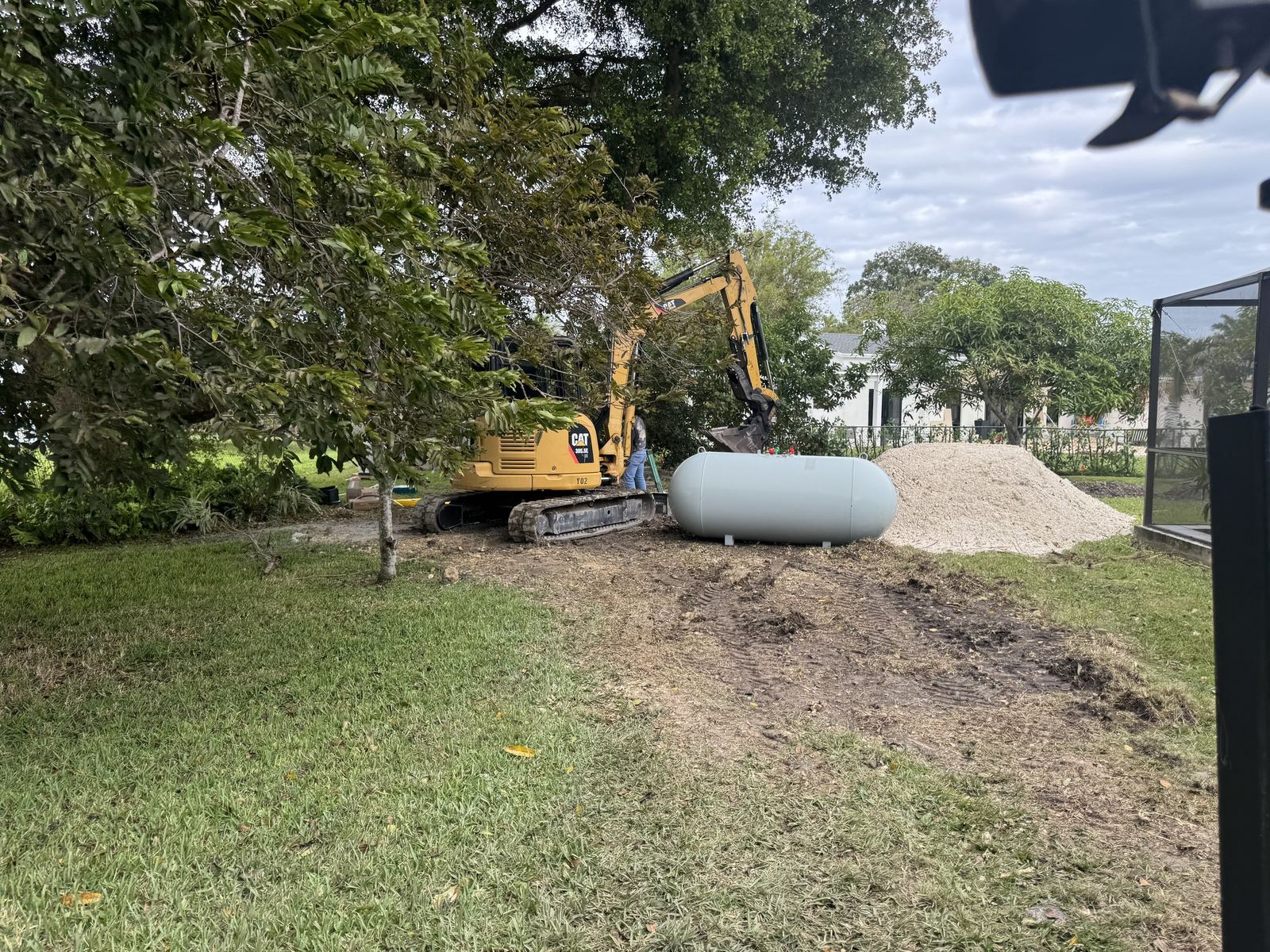
Above-ground or buried: 120, 250, 320, 500, 1,000 and 2,000 gallon tanks. Pad, anchoring, setbacks, and the gas line to the generator.
We handle the permit, coordinate the gas inspection, and are there when the inspector comes. Same as we do for the generator.
We schedule pre-season top-offs and named-storm fills with our propane supplier. We call or text you the day before each refill.
Connecting the tank to your generator and gas appliances: pool heaters, cooktops, BBQs, fireplaces, tankless water heaters, dryers, fire and water bowls, and torches. Regulator and line pressure checks included.
A tank and install for a whole-home generator is priced after your free assessment, depending on tank size, above-ground versus buried, and how far the line has to run. Refills are billed per gallon at the supplier’s rate that day. You get a fixed number for the install before we dig.
Tank, generator, and install on one permit, one inspection, and one financing application through Synchrony Bank, subject to credit approval.
See generator pricing →Buried costs more and disappears from the yard. Above-ground is cheaper and easier to service. Lot size, setbacks, and HOA rules usually make the decision for you — we walk it on the assessment.
Often, yes. We pressure-test it, check the regulator, and confirm it is sized for the generator’s draw. If it is too small for the runtime you want, we say so.
A standby generator burns very little between outages. The usual approach is to fill before hurricane season and top off when a storm is named.
Yes, when it is installed to code. The tank is set at the required distance from the house, anchored for wind, leak-checked before it is filled, and inspected by the city.
